5 Hidden Features of the Yoga Slim 7I Aura Edition 15 2024 You Must Know About
The Yoga Slim 7I Aura Edition 15 (2024) positions itself as a premium 15-inch ultraportable that balances style, battery life, and productivity. Beyond the headline specs—thin aluminum chassis, long battery life, and sharp display—there are several less obvious features that substantially affect day-to-day use. This article uncovers five of those hidden features, explains why they matter in real-world scenarios, and pairs the findings with a detailed review, pros & cons, a short comparison, and a practical buying guide for prospective buyers.
Introduction: Why "hidden" features matter
When shopping for a premium laptop, buyers often focus on CPU, RAM, storage, and screen resolution. Those specs matter, but so do the small, integrated features that shape the user experience: intelligent webcam behavior, software-enabled performance profiles, display power management, and meeting-ready audio processing. For professionals, creators, and frequent travelers, those secondary features can be the difference between a frustrating daily routine and a genuinely productive companion.
At-a-glance: What to expect from the Aura Edition
The Aura Edition 15 generally targets users who want a step up from mainstream Slim-series models: slightly better displays or tuned color profiles, extra software features oriented at hybrid work, and refined chassis finishes. The model commonly ships with Lenovo’s software suite (Lenovo Vantage), enhanced display calibration options, and a set of hardware + software integrations designed to improve privacy, video calls, and battery life without demanding constant manual adjustments.
Five hidden features explained (and how to use them)
1. Glance-powered context awareness (attention and privacy features)
One of the most useful but easy-to-overlook inclusions is gaze- and presence-aware software (often supplied via Mirametrix Glance or similar). On Aura Edition hardware this typically integrates with the webcam and sensors to provide:
- Auto-lock and screen dimming: the laptop can lock or obscure the screen when the user steps away, reducing the risk of shoulder-surfing in public places like trains or cafés.
- Window-aware privacy: some versions can pause or blur video calls when the user looks away or leaves the desk.
- Faster reactivation: the laptop senses presence and can restore the display more rapidly than waiting for a password entry (while still respecting configured security policies).
Real-world use case: a consultant working from a co-working space can have active video notes paused automatically when fetching coffee; a manager doing quick sensitive lookups in public won't have to worry about onlookers catching confidential details.
How to enable: check Lenovo Vantage or the “Glance” settings in system apps. Users should verify privacy and security settings so that auto-unlock is not enabled without a PIN or biometric fallback.
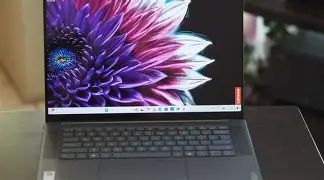
2. Per-app performance and battery profiles via Lenovo Vantage
Rather than manually switching between “Best performance” and “Best battery” every time, the Aura Edition supports per-application performance tuning. This feature assigns a performance profile to specific apps—giving video editing a temporary boost while keeping background chat apps in a low-power state.
- Benefits: better thermals when the laptop is running casual tasks, and predictable peak performance when the user opens demanding apps.
- Real-world case: a photo editor opens and automatically triggers a “Performance” mode for a short burst, then returns to “Balanced” once the export finishes—extending battery on long days.
How to use: open Lenovo Vantage > Power or Performance settings and create rules for apps. Combined with Windows power plans and the built-in fan profiles, this creates a smoother balance between thermals, noise, and battery life.
Shop the latest Electronics picks on Amazon.
See Deals →3. Adaptive display modes with color and refresh optimizations
Many buyers assume an OLED or high-resolution panel is a single static experience. The Aura Edition often includes adaptive display tuning—multiple factory-calibrated color profiles (sRGB, DCI-P3, Creator), and dynamic refresh-rate/panel power-saving modes.
- Variable refresh: the panel can step down refresh rate to save power during static tasks, then raise it for smooth scrolling or media playback.
- Creator mode: a calibrated profile optimized for color accuracy, useful for photo and video editors.
- Low-blue light and manual calibration: better options than a one-size-fits-all setting.
Real-world use case: a content creator drafts color-critical work using Creator mode, then switches to a long flight where the screen automatically lowers refresh rate to extend battery life by hours. Buyers who care about color accuracy and battery longevity will appreciate this flexibility.
4. AI-enhanced conferencing and background noise suppression
Hybrid work made this feature essential: the Aura Edition includes software-level noise suppression and voice isolation that removes background chatter, keyboard noise, or household sounds. This isn’t always obvious because the feature runs as a background service or within Lenovo’s audio controls.
- Advantages: clearer calls without the need for external mics or headsets; better automatic levels across different meeting platforms.
- Practical scenario: a remote worker joins morning standups from a busy household and relies on the laptop’s voice isolation to make their voice intelligible without turning up volume or asking others to be quiet.
How to activate: check audio settings in Lenovo Vantage or Windows sound control panels and enable “voice clarity,” “AI noise cancellation,” or similar toggles. Test across your preferred conferencing apps to ensure system-level processing is applied correctly.
5. Intelligent charging and battery health management
Battery longevity is one of the most important but least visible aspects of laptop ownership. Aura Edition systems typically include smart charging settings that limit maximum charge to preserve battery health, learn charging habits, and support rapid-charge modes.
- Battery preservation: set the laptop to stop at 80% for daily use and only charge to 100% when a full battery is necessary.
- Rapid charge: temporary high-current mode for quick top-ups—useful before meetings or travel.
- Learning behavior: the system can adapt charging patterns based on daily schedule to reduce full-charge cycles.
Real-world use case: a frequent traveler keeps the machine set to 80% while at a desk to minimize battery wear, then toggles rapid charge before boarding a long flight. This preserves battery capacity over years, lowering the likelihood of an early replacement.
Detailed product review and analysis
Design and build
The Aura Edition carries a premium aluminum chassis with tight tolerances and a refined hinge. The 15-inch footprint remains portable for its class—light enough to fit into briefcases yet rigid enough for daily carrying. The keyboard tends to be comfortable for long typing sessions with adequate travel and a generous palm rest. Trackpad responsiveness and gesture support are solid, and the overall finish is aimed at professionals who prefer discreet styling over flashy logos.
Performance and thermals
Performance scales well with common productivity and creative workloads. The combination of tuned power profiles and per-app performance rules produces consistent short-burst performance for exports and builds while avoiding prolonged high fan speeds. For sustained heavy workloads, expect the chassis to warm and the fan to raise noise; however, the laptop’s thermal design keeps throttling within reasonable bounds for its thin profile. Buyers who require workstation-class sustained performance should still consider dedicated workstations, but most users will find the Aura Edition a capable all-rounder.
Shop the latest Electronics picks on Amazon.
Browse Now →Display
Display quality is one of the Aura Edition’s selling points. Color-rich panels with factory-calibrated modes make it suitable for photo and video work. Peak brightness is typically adequate for indoor and moderate outdoor use, and the adaptive refresh options help balance smoothness and battery life. Matte versus glossy finishes vary by configuration—buyers should pick based on their primary environments.
Battery life
Thanks to optimized power management and intelligent display modes, battery life falls within expected ranges for a premium 15-inch ultraportable: a full workday under mixed use for many configurations, or longer if the system is tuned for battery preservation. Adaptive charging and rapid-charge features improve the real-world experience by reducing the need to hunt for outlets during busy days.
Audio and webcam
Audio tuning favors clarity over bass—good for conference calls and media consumption but not a replacement for external speakers for audiophiles. The built-in webcam benefits from the AI conferencing enhancements described earlier; combined with Glance-like presence features, the webcam becomes more privacy-friendly and easier to manage during meetings.
Ports and expandability
Port selection on the Aura Edition is practical: at least one USB-C (with power delivery), a full-size USB-A, and often an HDMI or microSD slot depending on regional SKUs. Expandability is limited—as with many thin-and-light designs, RAM is sometimes soldered. Buyers who want long-term upgradeability should verify the exact configuration before purchase.
Pros & Cons
- Pros:
- Refined build and premium styling suitable for professional use
- Smart display and battery optimizations that extend real-world runtime
- Built-in privacy and presence features (auto-lock, glance-aware behavior)
- AI-assisted audio and meeting tools that improve remote collaboration
- Per-app performance profiles for a better balance between performance and thermals
- Cons:
- Higher price relative to entry Slim-series models
- Limited upgradeability in typical thin-and-light designs (RAM often soldered)
- Thermals can still get noticeable under sustained heavy loads
- Region/configuration differences may change available ports and features—buyers must confirm SKU details
Quick comparison: Aura Edition 15 vs Standard Yoga Slim 7I 15
| Feature | Yoga Slim 7I Aura Edition 15 (2024) | Standard Yoga Slim 7I 15 |
|---|---|---|
| Target user | Creative professionals and hybrid workers seeking extra display and software polish | General productivity users and buyers seeking value in a premium chassis |
| Display options | Enhanced color profiles, adaptive refresh, creator-focused calibration | Good panels but fewer factory-calibrated options |
| Software features | Glance/presence features, per-app performance rules, advanced audio tuning | Standard Lenovo Vantage features; fewer advanced integrations |
| Battery management | Intelligent charging and learning modes included | Standard charging profiles and rapid-charge options |
| Price | Tends to be higher due to added features | More price-competitive |
Buying guide: how to choose the right configuration
When considering the Yoga Slim 7I Aura Edition 15 (2024), keep the following checklist in mind to make a purchase that aligns with real-world needs:
- Define primary use: frequent travelers value battery life and weight, creators prioritize display quality and GPU performance, while office-first users may care more about keyboard comfort and webcam clarity.
- Check upgrade paths: confirm whether RAM is soldered in the SKU you choose. If a long service life and future-proofing matter, prioritize higher RAM upfront.
- Pick the right display: if color accuracy is important, prioritize Creator or factory-calibrated panels and verify color gamut coverage in the specs.
- Verify ports: ensure required ports (USB-C with PD, HDMI, or a full-size USB-A) are present on the model you are buying—international SKUs sometimes differ.
- Confirm software features: if presence-aware privacy (Glance), per-app performance, or AI noise suppression are key, verify that those features are enabled on your regional model and not limited to select SKUs.
- Battery care options: use the laptop’s battery health settings to limit charging or adopt a schedule—this is especially important for users who keep laptops plugged in for long periods.
- Thermal expectations: if sustained heavy CPU/GPU workloads are routine, consider cooling pads or evaluate higher-performance laptops designed for sustained loads rather than thin-and-light models.
- Warranty and support: check available warranty extensions and on-site options in your region if uptime is critical.
- Test real-world performance: when possible, test the demo unit for keyboard/trackpad feel, fan noise under load, and display viewing angles. Retail displays can reveal small quirks not obvious from spec sheets.
Accessories to consider
- USB-C dock or multiport adapter for frequent desk use
- External color-calibrated monitor for precise creative work
- Comfortable external keyboard for extensive typing sessions
- Compact external speaker or headphones for audiophile needs
- Protective sleeve or thin case to guard the premium finish while commuting
Conclusion
The Yoga Slim 7I Aura Edition 15 (2024) offers more than premium materials and a crisp display; its lesser-known features—presence-aware privacy, per-app performance rules, adaptive display modes, AI conferencing enhancements, and intelligent battery management—are where the day-to-day value emerges. For hybrid workers and light creators who move between desks, flights, and client meetings, those features create a smoother, more efficient experience that pays off in productivity and longevity. Prospective buyers should verify the exact configuration and regional feature set before purchase, prioritize the display and RAM configuration for their work patterns, and take advantage of Lenovo’s software tools to customize performance and battery behavior to match their real-world routines.