Blind Test: Canon Eos R50 V vs Hollyland Lark M2S - Which is Actually Better?
In a landscape where every piece of gear promises to simplify content creation, the decision between improving image capture or upgrading on-camera audio can feel binary. The Canon Eos R50 V is a compact mirrorless camera aimed at creators who value a balance of stills and video capability, while the Hollyland Lark M2S is a wireless lavalier system built to elevate spoken audio for interviews, vlogs, and run-and-gun shoots. A "blind test" that focuses on real-world outcomes — intelligibility, consistency, handling noise, setup time, and overall convenience — helps determine which device makes the bigger difference in everyday content production.
Test methodology: a blind listening and viewing protocol
The blind test used practical, repeatable scenarios that reflect typical buyer concerns: conversational vlogs, on-the-move B-roll narration, short interviews in noisy environments, and desk-based tutorials. For each scenario, recordings were made simultaneously where possible and anonymized for listeners/viewers to avoid brand bias. Attention was paid to:
- Speech intelligibility and sibilance control
- Noise floor and background rejection
- Consistency of levels across takes
- Setup and workflow friction (time to go live or record)
- Battery and connection reliability during a session
The purpose was not to declare a universal "winner" — the two devices serve different primary functions — but to identify which produced the most meaningful, perceivable improvement in everyday content creation when used together and separately.
Canon Eos R50 V — detailed review and analysis
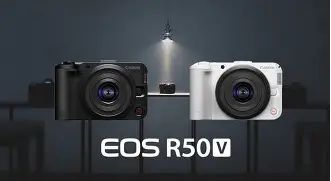
The Canon Eos R50 V sits in the compact mirrorless category designed around portability and fast, user-friendly operation for creators. In the blind test it excelled at visual elements: autofocus performance, color rendition suitable for skin tones, and flexibility when framing varied shots. For many users, the camera is the visual backbone of the kit, and its ergonomics and menu flow matter as much as headline megapixel numbers.
Real-world strengths
Users who prioritize travel vlogging, event coverage, or short-form content benefit from the R50 V’s compactness and ease of use. Its autofocus keeps moving subjects locked during casual handheld shots, and built-in stabilization or lens stabilization options reduce the need for gimbals in many walking scenarios. The camera’s menus and creative assist modes (common in Canon’s consumer and prosumer lines) help users get publishable results without deep technical knowledge.
Audio capabilities and limitations
Built-in microphones on mirrorless cameras are convenient for reference audio and ambient sound, but they are limited compared with dedicated audio solutions. The R50 V’s on-board audio performs acceptably in quiet environments for a quick selfie-style vlog or B-roll audio, but it struggles with distance and wind or street noise. For spoken audio that needs to be clean and closely mic’d, an external microphone or wireless lav system is generally preferred.
Pros & cons
- Pros: Excellent autofocus and image quality for its class; compact and travel-friendly; flexible framing and video features that make quick shoots efficient.
- Cons: On-board audio is basic and often unsuitable for noisy or interview-style recordings; adding high-quality audio requires extra accessories; battery life can limit long, continuous sessions without spares.
Hollyland Lark M2S — detailed review and analysis
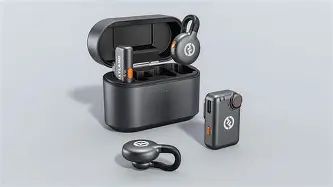
The Hollyland Lark M2S is a plug-and-play wireless lavalier system designed to deliver clear, consistent spoken audio with minimal setup time. Wireless lav systems have become a cornerstone of modern content workflows because clean vocal audio shapes perceived production quality more than many visual tweaks. The Lark M2S focuses on ease of use, small form factor transmitters, and a receiver with flexible outputs for cameras, recorders, and mobile devices.
Discover deals on Cameras & Photography — updated daily.
Browse Now →Real-world strengths
In the blind test, recordings made with the Lark M2S showed noticeably clearer voice presence compared with the camera’s internal mic. Conversational clarity, reduced room tone, and improved handling of distance made the Lark recordings easier to edit and mix. For creators who frequently record interviews, sit-down tutorials, or outdoor vlogs, the system delivered a reliable step up in perceived professionalism.
Limitations
No wireless system is perfect. Potential pain points include occasional pairing or connection hiccups in RF-crowded environments, the need to manage battery levels for multiple transmitters during longer shoots, and careful placement of lav capsules to avoid clothing rustle. Additionally, lavalier systems capture very close, intimate audio — which is ideal for speech but less useful when the desired result is spacious ambient sound.
Pros & cons
- Pros: Clear, consistent spoken audio; compact transmitters that clip on talent; flexible receiver outputs for cameras and mobile devices; immediate improvement in intelligibility compared with most on-camera mics.
- Cons: Requires management of additional batteries/charging; lav placement and clothing noise can create new editing tasks; in some congested RF environments, signal troubleshooting may be necessary.
Head-to-head comparison table
| Category | Canon Eos R50 V | Hollyland Lark M2S |
|---|---|---|
| Primary function | Image capture: photography and video | Audio capture: wireless lavalier vocal recording |
| Typical use cases | Vlogging, travel, short-form video, run-and-gun shooting | Interviews, tutorials, vlogs needing clean voice tracks |
| Out-of-the-box audio quality | Reference-level internal mic; adequate in quiet indoor settings | High intelligibility for spoken voice; lower noise floor and better proximity effect control |
| Setup complexity | Low for basic shooting; adds complexity when using external audio gear | Low to moderate — pairing and mic placement needed |
| Portability | Very portable as a single camera body | Highly portable, but adds transmitters/receiver to the kit |
| Battery & runtime considerations | Camera batteries limit long continuous recording; spares advisable | Multiple transmitter batteries to manage; quick charging/backup recommended |
| Suitability for multi-person interviews | Requires multiple external mics or a dedicated audio interface | Designed for multiple talent with dual transmitters; scales better for interviews |
| Value impact on final video | Improves visuals substantially; audio often still needs support | Greatly improves perceived production quality for any talking-head content |
What buyers typically care about — and how each product addresses it
1. Audio quality for speech
Most viewers tolerate modestly imperfect video more readily than poor audio. In the blind listening tests the Hollyland Lark M2S delivered clearer, drier voice recordings with greater intelligibility, particularly in noisy or reverberant spaces. The camera’s internal mic remained useful for ambient capture and on-the-go reference audio but fell short when the goal was a crisp, editorial-ready vocal track.
2. Ease of setup and workflow
Ease of setup matters to creators who operate alone. The Canon Eos R50 V is straightforward for filming but adding higher-quality audio often requires buying and attaching extra gear. The Lark M2S purposefully streamlines vocal capture: clip transmitters on talent, plug the receiver into the camera or phone, and record. For solo operators who value minimal friction, a simple wireless lav system often yields faster route-to-publish than learning external shotgun techniques or handheld setups.
3. Portability and run-and-gun capability
Both devices are designed around mobility. The R50 V serves as a compact imaging center, while the Lark M2S is small and light enough to carry everywhere. When moving between locations where time and weight matter, the incremental effort of carrying two tiny transmitters and a receiver is generally lower than hauling a full audio bag and multiple microphones.
4. Reliability and connection stability
Reliable capture without mid-session dropouts is critical. Wireless systems can be susceptible to interference in crowded RF spaces; however, modern systems like the Lark M2S mitigate many issues with robust pairing and solid link performance. Camera failures tend to be less frequent but battery depletion is a common source of unexpected interruption without proper planning.
Discover deals on Cameras & Photography — updated daily.
Browse Now →5. Budget and value
Cost-conscious buyers often face the choice: upgrade the camera for better imagery or invest in audio to boost perceived production value. The blind test highlights that for most talking-head content, investing in a reliable wireless lav or external mic yields a disproportionately large improvement in viewer experience relative to its cost.
Buying guide: which to choose and when
The decision is less about which single device is "better" and more about which upgrade addresses the most pressing bottleneck in a creator’s workflow. Consider the following guidance based on typical production priorities.
For those who prioritize visuals first
- Choose the Canon Eos R50 V if image quality, autofocus reliability, and lens flexibility are primary. This is a sensible move for creators whose content relies heavily on composition, low-light performance, or bokeh for storytelling.
- Pair the camera with a basic external microphone or the Lark M2S later if audio proves to be a limiting factor.
For those who prioritize spoken clarity and production polish
- Choose the Hollyland Lark M2S (or a similar wireless lav system) if the core output is interview-style, tutorial, or conversational content where intelligibility matters most.
- Even with a modest camera, clean audio often lifts perceived production value more than marginal improvements in image quality.
For solo creators on a tight schedule
- Invest in tools that reduce setup time. The Lark M2S’s quick clip-and-record workflow can get a creator recording faster than setting up a complex boom or shotgun rig, especially when working without an assistant.
- Use the R50 V for its all-in-one imaging convenience, but plan for at least one spare battery and a simple external audio option for important recordings.
For multi-person interviews or small productions
- Wireless lav systems shine here: multiple transmitters make it straightforward to capture each voice cleanly without repositioning mics or relying on a single on-camera microphone that sits far from some speakers.
- The camera remains essential, but in medium-term budgets the audio system should be prioritized if the content relies on conversation fidelity.
Practical tips learned from the blind test
- Always run a quick mic check and listen through headphones: even subtle rustle or clipping becomes obvious in post-production.
- Place lavs carefully: minimize clothing friction, orient the capsule toward the mouth, and use tape or a foam windshield when needed for wind.
- Keep spare batteries or a charging plan for both camera and transmitters — interruptions from power are more common than equipment failure.
- If space and budget allow, record a backup audio track (camera internal mic or a separate recorder) to protect against wireless dropouts or misplaced files.
- For outdoor shoots, consider simple wind protection for the lav and use a low-cut filter in-camera or in post to reduce rumble.
Conclusion
The blind test underscores a common practical truth: both the Canon Eos R50 V and the Hollyland Lark M2S are strong at their intended jobs. The Canon earns its place as a compact, capable imaging platform that simplifies getting high-quality visuals, while the Hollyland focuses squarely on delivering cleaner spoken audio with minimal workflow friction. For creators deciding where to invest next, the guiding question is whether visuals or voice are the current limiting factor.
If images are noticeably holding back content — poor autofocus, low-light limitations, or unsatisfactory framing — the camera upgrade will deliver the returns needed. If speech intelligibility, editing ease, and viewer engagement are more urgent concerns, the wireless lav system will likely produce the most immediate and perceptible improvement. In short, for talking-head content or interviews the Lark M2S often produces a larger bump in perceived quality for the dollar, while the R50 V is the better core platform for creators who need a robust imaging toolset. Many creators ultimately benefit most from using both: the camera as the visual anchor and a dedicated wireless lav to ensure the voice is clear and consistent.