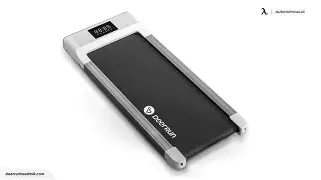
Deerrun Q1 Classic Treadmill Specs, Features, and Value: Is it worth the price tag?
The Deerrun Q1 Classic positions itself as a compact, home-friendly treadmill aimed at people who need a reliable walking and light-running machine without sacrificing floor space. As more consumers look for fitness equipment that fits into small apartments, home offices, or multipurpose rooms, the Q1 Classic claims to balance a modest footprint with a feature set that covers everyday cardio needs. This article examines the treadmill’s specifications and real-world performance, explains who it is best suited for, compares it to similar options, and offers a buyer’s guide to help determine whether the asking price represents good value.
Introduction: where the Q1 Classic fits in the market
Home treadmills fall into distinct categories: ultra-compact walking units, mid-range folding treadmills for commuters and casual runners, and heavy-duty commercial-grade machines for frequent runners and gyms. The Deerrun Q1 Classic targets the middle of the compact-to-mid-range segment. It is intended for buyers who want a stable machine for walking, interval jogging, and general conditioning without the expense, weight, and footprint of a gym-grade treadmill.
Buyers typically care about a few measurable things: motor reliability, running surface comfort and size, maximum supported weight, noise level, console and app connectivity, storage and portability, and warranty/service. Each of those elements factors into whether a treadmill is a good fit for a particular household. The sections below break down the Q1 Classic across those dimensions and consider real-world use cases such as daily walking, commute replacement (running indoors when weather is bad), and light training.
Detailed product review and analysis
Design and build quality
The Deerrun Q1 Classic is a folding treadmill with a modest footprint and a frame designed for apartment and small-home use. The machine features a folding deck that reduces floor space when not in use and built-in wheels for repositioning. The overall construction favors lighter materials to keep shipping and initial assembly manageable, while reinforcements are applied to key load-bearing points.
In real-world use, the Q1 Classic feels sturdy for walking and moderate jogging. The deck does not have the mass and rigidity of heavy commercial frames, so heavy or aggressive runners may notice some flex at higher speeds or when using long-stride running. For everyday walking, recovery workouts, and short interval runs, the build offers adequate stability.
Motor and performance
A treadmill’s motor is the heart of performance. The Q1 Classic’s motor is rated for steady home use and is tuned to provide smooth, incremental speed changes that suit interval workouts and casual steady-state cardio. For typical users—walkers, brisk walkers, and light joggers—motor power and responsiveness are generally satisfactory. However, the motor was not designed for constant high-speed running sessions or for supporting very large users at top speed for extended durations.
Practical point: buyers who expect to run daily at high intensity (long fast runs or sprint intervals) should compare continuous horsepower and duty-cycle ratings, because higher-intensity training benefits from more powerful, heavier-duty motors.
Running surface and cushioning
The Q1 Classic offers a running surface sized to accommodate walking and short jogging strides. The deck includes layered cushioning designed to reduce impact on joints compared with running on concrete or asphalt. Users who prioritize joint comfort for walking and recovery runs will find the cushioning effective.
That said, stride length and belt width are smaller than those found on large, non-folding treadmills. Taller users or those with a very long stride may feel constrained when jogging at faster paces, and may occasionally need to shorten stride or reduce speed for comfort.
Console, features, and connectivity
The treadmill’s console focuses on the essentials: speed, time, distance, calories, and pulse readouts. It typically includes a handful of built-in workout programs to add variety, quick-access speed keys for convenience, and an emergency stop/key for safety. Some Q1 Classic units incorporate Bluetooth connectivity and built-in speakers so users can stream audio from a phone, while others include basic app compatibility for tracking runs or connecting to third-party fitness apps.
For buyers who prioritize advanced metrics (stride length, ground contact time, power output) or immersive app-integrated classes, the Q1 Classic’s feature set is intentionally modest. It emphasizes straightforward workouts and easy use over bells and whistles.
Noise and household suitability
Noise is a frequent concern for apartment dwellers and shared households. The Q1 Classic is engineered to be relatively quiet at walking and moderate jogging speeds. Motor hum and belt noise are noticeable but typically below levels that would disturb adjacent rooms under ordinary use. Placing a treadmill mat under the unit and setting it on a stable surface reduces vibration and helps protect floors.
Shop the latest Electronics picks on Amazon.
Shop Amazon →For users on upper stories or those with noise-sensitive neighbors, it is wise to test noise at intended training speeds, since louder noise levels can appear at higher speeds or under heavier loads.
Assembly, portability, and storage
The Q1 Classic ships partly assembled with straightforward instructions. Two people can typically complete setup in 30–60 minutes depending on familiarity with fitness equipment. The folding deck with assist mechanism makes storage simple: it folds vertically and locks into place, freeing floor area and making it easier to slide under a desk or next to a closet.
Built-in wheels allow the treadmill to be tilted and rolled to a storage location, which is convenient for multi-use rooms. However, because it has less mass than commercial treadmills, the machine can move slightly under heavy use; anchoring on a level surface is important for long-term stability.
Warranty and after-sales support
Warranty offerings for home treadmills vary widely. The Q1 Classic is typically supported by a limited warranty that covers the frame for a longer period than electrical components and wear items. Buyers should review the specifics: frame warranty length, motor warranty length, parts and labor coverage, and whether in-home service is offered or if units must be shipped to a repair center.
Real-world buyers commonly place high value on a longer motor and frame warranty, as those components are the most expensive to repair or replace. A short parts warranty can still be reasonable for budget models, but extended coverage adds peace of mind.
Specifications (at-a-glance)
| Specification | Deerrun Q1 Classic (typical listing) |
|---|---|
| Motor | 2.0 CHP continuous (suitable for walking and light jogging) |
| Speed range | 0.5–7.5 mph (0.8–12 km/h) |
| Running surface | 48" x 16" (122 x 41 cm) |
| Incline | Motorized incline up to 12% (multiple levels) |
| Max user weight | 265 lbs (120 kg) |
| Programs | 12 built-in workout programs + manual |
| Console | LED display (speed, time, distance, calories, pulse), Bluetooth audio |
| Foldability | Hydraulic fold assist, transport wheels |
| Noise | Moderate (quiet at walking speeds, noticeable at higher speeds) |
| Warranty | Frame: 2 years; Motor: 1 year; Parts & labor: 1 year (typical) |
| Approx. assembled footprint | 69" L x 29" W (folded height about 49") |
Pros & Cons
- Pros:
- Compact folding design that suits small apartments and multipurpose rooms.
- Effective cushioning that eases joint impact for walkers and recovery runners.
- Simple, user-friendly console with basic programs and Bluetooth audio.
- Reasonable stability for walking and short jogging sessions.
- Relatively quiet operation at low-to-moderate speeds.
- Cons:
- Running surface is narrower and shorter than full-size treadmills—may feel restricted for long-stride runners.
- Motor and frame are optimized for moderate use, not for daily high-intensity running or very heavy users.
- Warranty on motor and electronics is shorter than some higher-end models.
- Advanced connectivity and coaching features are limited compared with app-first treadmills.
How the Deerrun Q1 Classic compares (concise table)
The comparison below contrasts the Q1 Classic with a generic budget folding treadmill and a mid-range compact treadmill to help buyers gauge relative value.
| Feature | Deerrun Q1 Classic | Typical Budget Folding Treadmill | Typical Mid-Range Compact Treadmill |
|---|---|---|---|
| Motor | ~2.0 CHP | ~1.0–1.5 CHP (suitable for walking) | ~2.5–3.0 CHP (better for regular running) |
| Running surface | 48" x 16" | 40–45" x 14–16" | 50–60" x 20–22" |
| Incline | Motorized up to 12% | Typically none or manual | Motorized, often up to 15% |
| Programs/Console | 12 programs, Bluetooth audio | Limited programs, basic display | Wide program selection, better displays, app integration |
| Noise | Moderate | Lower motor power, but belt noise can vary | Engineered for quieter operation at higher loads |
| Best for | Walkers, light joggers, space-constrained homes | Casual walkers, very tight budgets | Serious runners who need space-saving options |
Real-world use cases and buyer considerations
Understanding how the treadmill will be used clarifies whether the Q1 Classic is an appropriate purchase. The most relevant buyer profiles include:
- Apartment dwellers and small-home users: The folding design and modest footprint make the Q1 Classic a good fit for compact spaces. It’s straightforward to fold and slide into storage after a session.
- Walkers and recovery athletes: People using a treadmill for daily walking, fat-loss walks, or low-impact recovery runs will appreciate the cushioning and accessible controls.
- Occasional joggers: Those who run occasionally or do interval workouts a few times per week will get acceptable performance, assuming they are not very tall or heavy and they don’t require sustained top-speed running.
- Buyers on a moderate budget: For consumers who want more features than a bare-bones walking treadmill but can’t justify the cost or space of a full-size machine, the Q1 Classic sits in a middle ground.
Who should look elsewhere? Serious daily runners, tall users with long strides, and households where several people will use the treadmill for long, high-intensity sessions should evaluate sturdier, non-folding machines or higher-power mid-range models that provide longer warranties and larger running decks.
Buying guide: what to check before purchasing
When deciding if the Deerrun Q1 Classic (or any treadmill) is the right purchase, evaluate the following factors in order of importance to the intended user:
1. Intended use and training volume
Be realistic about how often and how intensely the treadmill will be used. For daily heavy running, prioritize motors rated for continuous use and a larger deck. For walking and light jogging, the Q1 Classic’s motor and deck are sufficient in most cases.
2. Motor power and duty cycle
Look at continuous horsepower (CHP) rather than peak ratings; CHP gives a better picture of sustained performance. A 2.0 CHP motor is typically fine for moderate home use, while serious runners may target 2.5 CHP or higher.
3. Running surface dimensions
Measure potential users’ stride lengths. A deck that is at least 55" long and 20" wide is preferable for runners; for walkers, a 48" x 16" deck can be adequate. If multiple household members with different heights will use the treadmill, err on the larger side.
Shop the latest Electronics picks on Amazon.
See Deals →4. Weight capacity and stability
Choose a treadmill with a maximum user weight comfortably above the heaviest user’s body weight. This ensures longevity and stable performance. For regular running, a higher maximum weight rating usually means a sturdier frame.
5. Noise and floor protection
Consider apartment rules, neighbors, and room acoustics. Budget for a treadmill mat to reduce noise, protect flooring, and dampen vibration. If noise is a major concern, inspect or test the machine at moderate-to-fast speeds when possible.
6. Warranty and service
Read the fine print: how long is the frame coverage? How long is the motor warranty? How are parts and labor covered? Is in-home service available, or does maintenance require shipping parts? Stronger warranty terms are more valuable in the long run.
7. Connectivity and programs
Decide whether simple built-in programs and Bluetooth audio suffice, or whether immersive app ecosystems and heart-rate-guided workouts are important. The Q1 Classic caters to users who prefer simplicity over app-driven coaching.
8. Footprint and storage
Measure the room where the treadmill will live and account for forward and rear clearance needed for safe use. Decide whether the ability to fold and roll the treadmill away is essential.
9. Assembly and delivery options
Check whether the seller offers white-glove delivery or free assembly. If the buyer will assemble the treadmill themselves, verify the complexity and number of people required. Some manufacturers also offer on-site setup for an additional fee.
10. Reviews and long-term reliability
Seek out user reviews that describe months or years of ownership for insights into durability, electronic reliability, and any recurring issues. Pay attention to comments about motor longevity, belt wear, and post-purchase support.
Practical tips for getting the most from a Q1 Classic
- Use a treadmill mat to reduce vibration and protect your flooring.
- Keep the belt properly tensioned and lubricated according to the owner’s manual to extend belt life and prevent motor strain.
- Place the treadmill on a level surface—uneven floors can cause noise, tracking issues, and frame stress.
- Warm up and cool down for every session to reduce wear on the machine and lower injury risk.
- Regularly wipe down the console and handrails to keep electronics clean and sensors working.
Conclusion
The Deerrun Q1 Classic targets buyers who want a compact, well-cushioned treadmill for walking, daily conditioning, and occasional jogs without consuming a large amount of space. Its folding design, straightforward console, and cushioning make it a practical choice for apartment dwellers and those who prioritize convenience and basic functionality.
However, the Q1 Classic is not a one-size-fits-all solution. For users who demand heavy-duty performance, long-distance or high-intensity running, or advanced app-integrated coaching, a larger mid-range or commercial treadmill is a better fit. The warranty terms, motor rating, and running surface dimensions should guide the final decision: if those align with the buyer’s training style and household needs, the Q1 Classic can offer sensible value. If training demands are higher, investing in a sturdier model will likely pay dividends in longevity and performance.
Ultimately, the Deerrun Q1 Classic represents a balanced, space-conscious option for many home users. The treadmill’s strengths—compactness, cushioning, and user-friendly features—make it worth considering for walking and casual running routines. Prospective buyers should match the machine’s specifications to their primary workouts and expectations for durability before deciding whether the price tag delivers the value they need.