The Truth About the Insta360 Go Ultra: Pros, Cons, and Verdict
Introduction
The Insta360 Go Ultra is positioned as a pocket-sized action camera aimed at users who prioritize portability, hands-free capture, and fast, shareable content. It carries forward the compact ethos of the "Go" lineup: tiny form factor, flexible mounting options, and software-driven stabilization and editing. For people deciding whether to carry a Go Ultra on weekends, strap it to a helmet, or keep it in a pocket for cinematic spur-of-the-moment clips, the promises of convenience and quality are compelling—but not without trade-offs.
This article provides an objective examination of the Insta360 Go Ultra: how it performs in real-world scenarios, what buyers typically care about, its strengths and weaknesses, a comparative look against other popular action cams, a practical buying guide, and a concluding verdict. The goal is to provide the actionable information a buyer needs without marketing hyperbole.
Detailed Product Review and Analysis
The Insta360 Go Ultra seeks to solve a specific problem: how to capture steady, well-framed footage without hauling a bulky rig or learning complex camera setups. The design ethos centers on minimalism. The camera itself is very small and lightweight, designed to be worn, stuck to surfaces with a magnetic mount, or slipped into accessories that turn it into a necklace, clip, or wrist cam. That physical convenience is the product’s primary selling point.
Form factor and build quality
In practice, the Go Ultra’s size is both a blessing and a limitation. The small chassis makes it unobtrusive—ideal for run-and-gun filmmaking, POV shots on bikes or surfboards, and travel scenarios where every ounce and inch of luggage matters. The build quality typically follows Insta360's recent standards: a mix of lightweight plastics with purposeful reinforcement around mounting points. For many users, the magnetized quick-mounts and minimal control surface (one or two buttons) reduce friction when capturing spontaneous moments.
Image and video performance
Video quality depends on sensor size, lens optics, and image processing. In this category of subcompact cams, the Go Ultra aims to maximize perceived image quality through computational imaging—stabilization algorithms, smart exposure, and automatic HDR processing. In good light, footage tends to be clean, sharp enough for social media and casual editing, and pleasing due to aggressive stabilization. Low-light and high-contrast scenes reveal the usual limitations of tiny sensors: noise, reduced dynamic range, and a tendency for highlight clipping in very bright areas.
Buyers who care about cinematic shallow depth of field or the ultimate low-light performance will find larger-sensor cameras superior. However, for travel vlogs, day hikes, city exploration, and POV sports, the Go Ultra produces more than acceptable output—especially when clips are destined for phone screens or social platforms.
Stabilization and horizon correction
Stabilization is arguably the signature capability for this type of device. The Go Ultra relies heavily on software-based stabilization, paired with optical design and motion sensors. The result is footage that often looks gimbal-smooth, with reliable horizon correction that is useful when capturing dynamic movement (running, biking, or quick pans). For sudden jolts or extended shakiness, stabilization may introduce slight crop or warping artifacts, but this is an acceptable compromise for most consumers who benefit from the compactness.
Audio capture
Small cameras struggle to offer rich onboard audio. The Go Ultra is no exception: onboard microphones capture ambient sound adequately but lack the warmth and clarity of dedicated external mics. Wind noise in outdoor use remains a persistent challenge. The manufacturer’s mobile app attempts to mitigate these limitations through wind reduction and audio gain control, but serious creators often pair the camera with a separate audio recorder or use voice-over in post-production for better results.
Shop the latest Electronics picks on Amazon.
Shop Amazon →Battery life and workflow
Battery life in ultra-compact action cameras is commonly the most frequent complaint. The Go Ultra’s power envelope allows for short bursts of continuous recording, and many users rely on a charging case or module to extend operating time during outings. For long adventures, one or two spare batteries or a charging case are practical necessities. The charging solution often doubles as a protective carry case and may offer quick off-board charging for repeat use.
Workflow is another key consideration. Insta360’s mobile app and desktop software emphasize quick editing, AI-assisted clip selection, and template-driven social output. This is a strong point for creators who favor speed over granular manual editing: content can be captured, trimmed, and exported to social formats within minutes. More advanced editors can still export high-bitrate files to a desktop for color grading and fine control.
Durability and water resistance
For adventurers, the camera’s water resistance rating and mounting ecosystem matter. The Go Ultra typically supports splash- and rain-resistant use out of the box, and may require a housing for deeper submersion depending on the model configuration. Mounting variety—helmet mounts, adhesive mounts, clips, and magnetic adapters—make the camera versatile. Buyers should check the exact water rating and whether additional housings are necessary for intended aquatic activities.
Real-World Use Cases
- Travel vlogging: Lightweight, pocketable capture that reduces friction—ideal for capturing candid moments and quick B-roll.
- Action sports (cycling, skateboarding, climbing): POV and helmet-mounted perspectives that benefit from strong stabilization and wake-of-motion capture.
- Everyday carry and documentary snippets: Fast deployment for interviews, street scenes, or day-in-the-life clips without calling attention.
- Hands-free tutorials: Neck- or chest-mounted footage suitable for DIY or cooking content when mobility is necessary.
- Content creators who prioritize speed: Those who want quick edits for social platforms will appreciate the app-first ecosystem.
Pros & Cons
Key advantages
- Ultra-portable: One of the smallest and lightest options for capturing stabilized footage without a gimbal or large rig.
- Excellent stabilization: Software-driven motion smoothing and horizon correction deliver impressive results for POV and action shots.
- Fast mobile workflow: App-centered editing and AI features make it easy to craft social-ready clips quickly.
- Flexible mounting system: Magnets, clips, and accessories enable creative placement and hands-free capture.
- Low visual footprint: Discreet capture that is less intrusive than larger cameras—useful in candid or street scenarios.
Main drawbacks
- Limited battery life: Short continuous recording times necessitate backup batteries, a charging case, or frequent recharging.
- Compromised low-light performance: Small sensor size results in noise and reduced dynamic range in dim environments.
- Audio limitations: Onboard microphones are convenient but not a substitute for external audio capture in demanding scenarios.
- Not a full replacement for larger action cams: While superb for quick clips, it cannot match larger cameras for sensor size, optics, or professional-grade footage.
- Potential stabilization artifacts: Aggressive stabilization can introduce cropping or warping in extreme movements or tightly framed shots.
Comparison: Insta360 Go Ultra vs. Common Alternatives
| Category | Insta360 Go Ultra | Compact Action Camera (typical competitor) | Larger Action Camera (typical competitor) |
|---|---|---|---|
| Size & Weight | Extremely compact—designed to be pocketable and wearable | Small, but larger than Go Ultra | Bulky compared to ultra-portables |
| Stabilization | Software-forward, horizon correction built-in | Good stabilization, sometimes hardware-assisted | Excellent stabilization with higher-resolution sensors |
| Image Quality | Very good in daylight, limited in low light | Balanced—better sensors in some models | Best—larger sensors, better dynamic range |
| Battery Life | Shorter, relies on charging cases or spares | Moderate | Longer battery life; swappable batteries |
| Mounting Versatility | High—magnetic mounts and accessories | High—standard mounts and accessories | High—industry-standard mounting and accessories |
| Workflow | Mobile-first with fast edits | Balanced mobile + desktop ecosystem | Professional desktop workflows available |
| Best For | Spontaneous capture, social creators, POV shots | General-purpose action filming | Serious filmmakers, high-quality action footage |
Buying Guide: How to Decide if the Go Ultra Is Right for the Buyer
When considering the Insta360 Go Ultra, buyers should weigh a few practical factors beyond headline features. The following points reflect what most buyers typically care about and how to evaluate them against personal needs.
1. Primary use case matters most
If the main intention is to capture short, shareable moments—POV adventures, travel snippets, or hands-free tutorials—the Go Ultra is highly compelling. For users who need long, uninterrupted takes or studio-level footage, larger cameras with swappable batteries and larger sensors will be a better fit.
2. Consider battery ecosystem
Battery life can make or break an outing. Plan for how long and how intensively the camera will be used. If the typical outing is several hours with continuous capture, budget for a charging case, spare batteries, or power banks. For intermittent short clips throughout the day, the compact charging ecosystem often suffices.
3. Assess stabilization and intended mounting
Check whether the intended mounting scenarios (helmet, chest, bike, adhesive) are supported and whether the stabilization suits those movements. The Go Ultra’s stabilization excels at smoothing human motion and typical action sports, but some extreme use cases (high-vibration motorcycles, very rough trails) may expose limitations.
4. Think about audio needs
If the end product requires clear, high-quality audio (interviews, narrated tutorials, dialogue-driven scenes), plan for an external audio solution. The Go Ultra’s onboard audio is serviceable for ambient sound and first-person capture, but not a substitute for dedicated mics in professional contexts.
Looking for the best Electronics deals on Amazon?
Browse Now →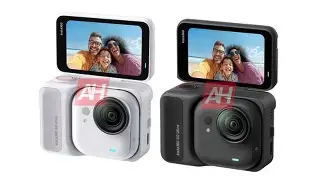
5. Editing workflow and platform expectations
Buyers who want to produce content quickly for social platforms will appreciate the app-driven AI features and templated exports. Those who plan extensive post-production, color grading, or multi-camera edits should confirm that the camera can output high-bitrate files and that the desktop workflow supports their needs.
6. Accessories and future-proofing
Evaluate the mount ecosystem, availability of spare parts (mounts, adhesive pads, housings), and how the camera fits into existing gear. For multi-camera shoots, compatibility with generic mounts and stabilization rigs is an advantage.
7. Durability and environmental protection
Verify the camera’s official water resistance rating and whether additional housings are required for underwater activities. Check warranty terms and manufacturer support options, especially for buyers who intend to use the camera in harsher environments.
Price vs. Value Considerations
Price often reflects the trade-offs inherent in ultra-compact cameras: convenience and portability for less-exceptional low-light and audio performance. Value-minded buyers should think of the Go Ultra not as a replacement for a high-end action camera, but as a complement—something to carry when larger gear is impractical. For creators who prioritize being ready to capture every minute of a trip with minimal encumbrance, the value is strong. For professionals who need the best raw image quality, larger sensors and interchangeable-lens setups (or higher-end action cams) deliver more long-term value.
Practical Tips for Getting the Most Out of the Go Ultra
- Plan battery management: Carry a charging case or a small power bank for day-long adventures.
- Use the app’s AI sparingly: Let it create quick cuts for social uploads, but export raw files for serious editing.
- Prioritize placement: Test different mounts and positions—chest, helmet, and shoulder can produce distinct storytelling POVs.
- Protect the lens: Given the compact design, lens scratches are a real risk—store the camera in its case when not in use.
- Supplement audio: For interviews and voice-forward projects, record audio separately and sync in post.
Conclusion
The Insta360 Go Ultra is a compelling option for a specific group of buyers: those who value ultimate portability, rapid mobile workflows, and creative POV options over the absolute best sensor performance or studio-level audio. In everyday use—the kind of run-and-gun scenarios that make travel and lifestyle content engaging—the Go Ultra shines. Its stabilization, mounting flexibility, and app-driven editing help users capture and publish stories quickly and with surprisingly steady results.
However, the device is not a universal replacement for larger action cameras. Buyers who need long battery life, superior low-light performance, or professional audio will need to supplement the Go Ultra or opt for larger alternatives. The decision ultimately comes down to use case: for spontaneous content capture and minimal gear setups, the Go Ultra is a practical and often delightful tool; for polished, cinematic productions, it should be one tool among several in a creator’s kit.
For shoppers making the choice, the best approach is pragmatic—match the camera’s strengths to the intended workflow, plan for battery and audio limitations, and test mounts in the kinds of motion and environments most relevant to the user. When those elements align, the Insta360 Go Ultra delivers excellent convenience and performance for the moments that matter most.